
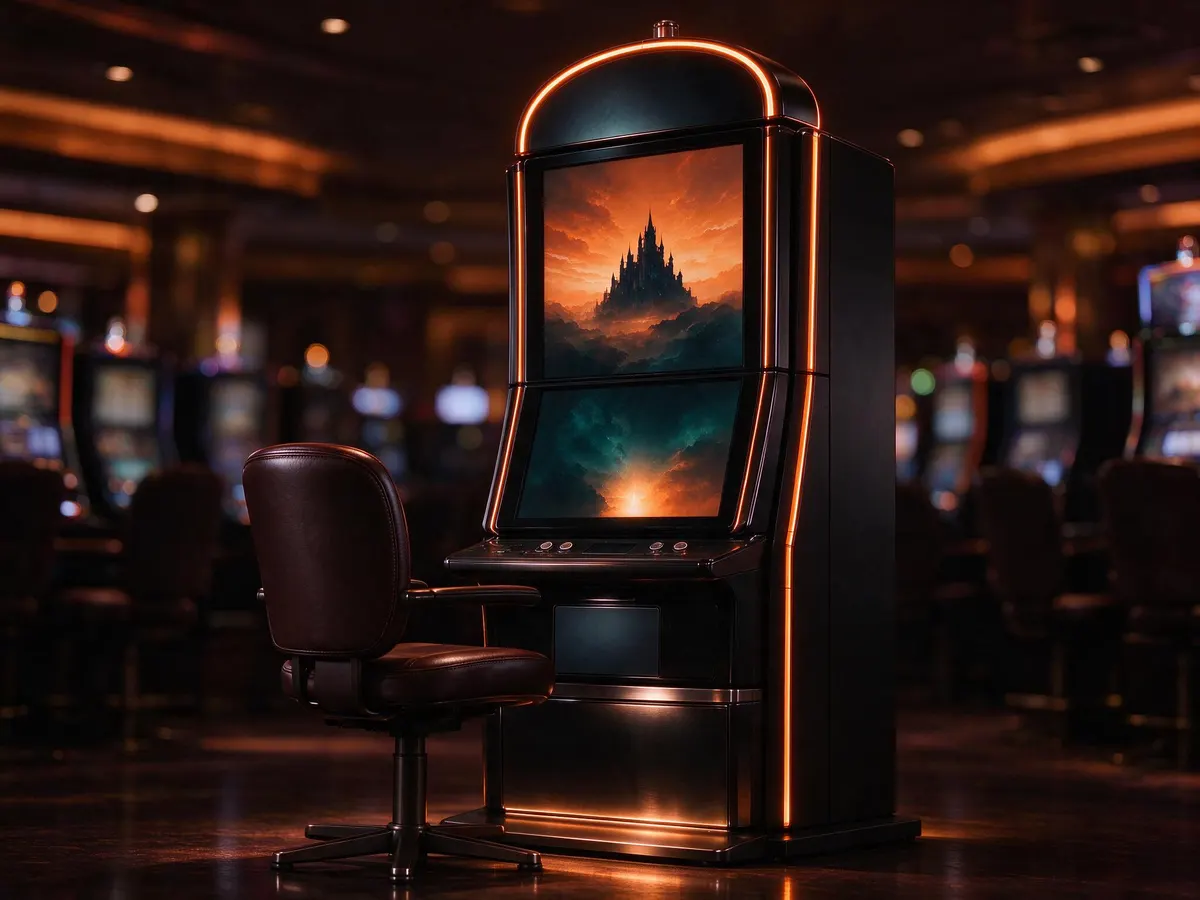
Why does one machine pull a crowd while the identical game three rows away sits empty?
Nine times out of ten the answer is the box, not the game. The Zitro Fantasy cabinet is a good case study in that, because it is hardware first: a premium slot machine cabinet, meaning the physical platform of screens, button deck, chassis, lighting and sound that Zitro’s games are loaded onto. It isn’t a game itself. And it’s been spreading across Latin American casino floors, most recently with an installation at Casino Buenos Aires.
Let’s follow that one install from purchase decision to the player’s seat, because it explains most of what operators and slot enthusiasts want to know about this category of casino equipment.
What the Zitro Fantasy cabinet is, in plain terms
A cabinet and a game are two separate products, and conflating them causes a lot of confusion. The game is software: reels, symbols, paytable, maths, the certified return to player figure. The cabinet is the furniture and the computer inside it. One cabinet model hosts a library of titles, and the same title can often appear on several cabinet models with different screen layouts.
Fantasy is Zitro’s premium end of that equation. The company, a supplier of both land based gaming machines and iGaming titles, describes the model in terms of its striking design and its commanding presence in the room, with each title getting its own visual identity and high quality graphics paired to distinct game mechanics. That phrasing tells you the design brief: this is a cabinet built to be seen from the other side of the floor.
Worth saying up front, since the brief here is technical: Zitro’s announcement around the Casino Buenos Aires rollout emphasised design, content and floor impact rather than publishing a full engineering spec sheet. So where I describe hardware below, I’ll separate what has been stated publicly from what you should verify on the manufacturer’s spec document before signing a purchase order.
Following the Casino Buenos Aires install
Casino Buenos Aires added Fantasy to its floor along with three titles: Brave Dragon and Lion Falls, both exclusive to the cabinet, plus Legendary Hammer, a more recent regional release. All three arrived with track records in other markets, which is the quiet part of any cabinet deal. Operators rarely buy hardware on hardware merits alone. They buy a cabinet because of the games it unlocks and the performance data those games already carry from comparable floors.
General manager Darío Montero framed the decision around adding value and entertainment to the venue, calling Fantasy a premium product his customers had been asking for by name. That detail matters more than it sounds. When regulars start requesting a specific cabinet, the hardware has stopped being a container and become part of the venue’s draw. Alejandra Burato, Zitro’s regional director for Latin America, handled the supplier side of the announcement.
From launch, Fantasy has grown into one of the better performing models in Zitro’s portfolio, with an expanding footprint among major Latin American operators. The Buenos Aires install is one data point in that pattern rather than a one-off experiment.
The hardware, part by part
Display and screen technology
Premium cabinets in this class are defined by their glass. The move over the last decade has been away from a single modest screen with a mechanical-looking reel window and towards large, tall, high resolution displays that fill the player’s field of view, frequently paired with a separate topper screen above head height. The topper does two jobs: it carries jackpot or feature information for the seated player, and it advertises the game to everyone walking past.
Zitro’s own emphasis on high quality graphics and a per-title visual identity only works on a display with the resolution and brightness to carry it. If you’re evaluating a cabinet, the questions to ask the supplier are specific: panel size and resolution, brightness and anti-glare treatment, whether the main display is touch enabled across its full height, and whether the topper is a true screen or a printed light box. Those four answers tell you more about the real player experience than any marketing adjective.
Button deck and control interface
The button layout is where cabinet design either disappears or annoys. A good deck puts spin, bet selection and cash out where a hand naturally falls, keeps the big primary action unmistakable, and doesn’t bury denomination changes behind a menu. Many modern decks are partly or fully digital, letting the same hardware present a different control set for each title in the library, which is handy when one game has a hold-and-spin feature and another needs a multi-line bet selector.
Alongside the deck sit the parts players touch without thinking about: the bill validator, the ticket printer, the card reader for loyalty or cashless play, and the service button. Placement and reach on those items are a genuine usability factor, particularly for a seated player who shouldn’t have to stand up to feed a note.
Ergonomics and footprint
Slot machine ergonomics come down to three measurements: eye line to screen centre, hand position on the deck, and knee clearance under the chassis. Get them wrong and sessions get uncomfortable within minutes. Get them right and players stay seated because nothing is nagging at them. Tall cabinets with large vertical screens have to be especially careful here, because a display that sits too high forces the head back.
Footprint is the operator’s version of the same problem. A commanding cabinet takes floor space, needs a clear sightline to justify it, and wants power and network provision in the right spot. Cabinets with strong visual presence usually earn their square metres by anchoring a bank, drawing attention to a corner, or marking an entrance.
What cabinet design changes for a player, and what it cannot
On land based slot machines, hardware shapes comfort, clarity and dwell time. Clear typography and a bright panel mean you can read your balance and the paytable without squinting. Sound projected near head height keeps the game audible without needing to be loud. Reachable controls and sensible seat geometry make a longer session physically easier. Lighting and a topper help you find the game again after a break. All of that is real, and it’s why suppliers invest heavily in cabinet features.
Here is the part the marketing never says: none of it changes the odds. Return to player and volatility are properties of the game software and its certified paytable, approved by the relevant regulator. A spectacular cabinet running a 95% RTP title returns the same 95% over the long run as a plain upright running the identical maths, which also means the house edge, the remaining 5%, is unchanged. Bigger screens, deeper sound and brighter lighting make a game more immersive, and immersion tends to extend play. That’s exactly why it’s worth setting a budget and a time limit before you sit down, and using the deposit, loss and session limit tools your venue or operator offers. Treat it as paid entertainment, not income.
Fantasy versus a standard slot cabinet
Comparing a premium model against a core upright is the clearest way to see what the money buys. The table below sets out the typical differences between the two classes of casino floor hardware rather than quoting specific figures for any one model.
| Element | Premium cabinet (Fantasy class) | Core / standard upright |
|---|---|---|
| Main display | Large, tall, high resolution, built to fill the player’s view | Smaller single or split screen, functional sizing |
| Topper | Usually present, often a screen carrying jackpot or feature art | Often absent or a simple printed light box |
| Lighting and finish | Sculpted chassis, dynamic lighting, per-title visual identity | Plain body, static or minimal lighting |
| Audio | Multi-channel, positioned near the player’s head | Basic stereo output |
| Control interface | Digital or hybrid deck that adapts per title | Fixed mechanical button layout |
| Content | Exclusive titles tied to the cabinet | Broad, widely available game library |
| Floor role | Anchor position, bank centrepiece, visual landmark | Volume placement, fills rows and secondary areas |
| Cost and space | Higher unit cost, larger footprint | Lower cost per seat, denser layout |
Neither column is the better choice in the abstract. A floor built entirely from premium cabinets is expensive and visually exhausting; a floor without any has nothing to draw the eye. The install at Casino Buenos Aires is the standard pattern, a small number of premium units placed where they’ll be noticed, carrying content that isn’t available elsewhere on the floor.
Where Fantasy fits among Zitro gaming machines
Zitro supplies both physical gaming machines and online casino content, and its machine portfolio spans several cabinet families aimed at different floor jobs. Fantasy occupies the premium, high visibility slot in that lineup, which is why it tends to arrive bundled with exclusive titles rather than the general catalogue. Since launch it has become one of the company’s stronger sellers, with a widening presence among leading operators across Latin America. Details on the current range are published on Zitro’s own site.
Next time you walk a floor, do the test that operators do. Sit at the premium cabinet and the plain one running similar maths, and notice what changes: how far you reach for the spin button, whether you can read the paytable from a normal seated posture, whether the sound sits in front of you or behind. That’s the whole argument for cabinet design in about two minutes, along with a useful reminder that everything you just felt was about comfort and presentation, not about the numbers behind the reels.