In a standard cascade slot, 100% of the winning symbols are removed from the grid. Every single one. BGaming changed that one rule in Bonanza Billion Merge Up+, and that single change is the entire argument behind merge-style slots.
If you have played a tumble or avalanche game, you know the loop: symbols pay, symbols vanish, new symbols drop in, repeat until nothing pays. The merge slot mechanic interrupts that loop by leaving something behind. Here is what it actually does, how BGaming’s release demonstrates it, and where it genuinely differs from cluster pays and old-fashioned paylines.
What is the merge slot mechanic?
The merge slot mechanic is a variant of cascading reels in which winning symbols don’t simply disappear. They fuse, and the merge leaves a symbol on the grid — one that was already in play. So instead of a clean wipe followed by a random refill, each win hands something forward to the next drop.
That is the part people misread. Merging is not how the win is formed; it is what happens after the win is paid, during the refill. The win itself still needs whatever the game’s base rule is (matching symbols in a cluster, on a line, or in a “pays anywhere” group). The merge is the clean-up step.
BGaming describes the logic plainly: the more identical symbols are already in play, the better the chance that the same symbol is what comes out of a merge. The studio says it refined the feature using feedback from players and streamers, specifically to fix a frustration baked into cascade games — you build a promising board, it pays, and then everything you built gets deleted.
Across the wider market, “merge” is used loosely for a few related ideas: low-value symbols combining into higher-value ones, multiplier symbols combining into a bigger multiplier, or several symbols consolidating into one. The thread connecting them is that two or more symbols are consumed to produce a single new one, and that new symbol stays on the grid.
Bonanza Billion Merge Up+: the mechanic in play
BGaming’s release pairs the Bonanza Billion look with an upgraded version of its Merge Up mechanic, and sits in the studio’s #Entertainment series. The original Bonanza Billion launched around five years ago and became one of BGaming’s better-known titles, so the sequel is doing something sequels usually do: keep the furniture, change the engine.
Grid, fruit and gems
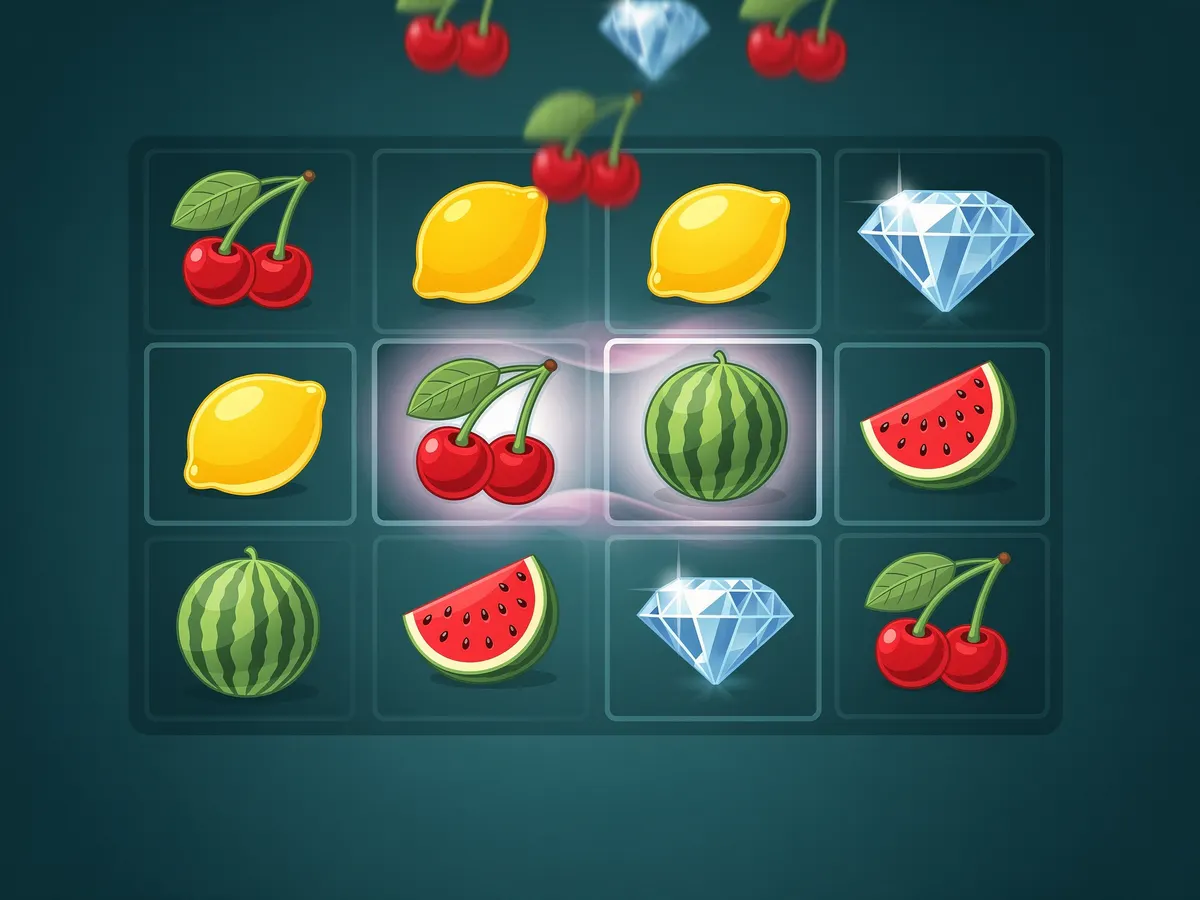
Visually, nothing here will surprise you. The Bonanza Billion family runs on fruit and gem symbols on a grid-based layout — glossy cherries, melons, plums and cut stones, with the gems sitting at the top of the paytable. It is deliberately familiar territory for anyone who has played fruit-and-gem tumble slots.
One practical note: grid size, symbol values and the exact RTP build can differ between casinos, because studios often license games in more than one configuration. The info panel inside the game client is the only place worth trusting for those numbers. Read it before you spin, not after.
How merging turns into the next win
The sequence works like this:
- A winning combination lands and pays out.
- Rather than clearing every participating symbol, the game merges them and leaves one symbol standing on the reels — weighted toward symbols already present on the board.
- New symbols drop in around the survivor, and the grid is re-evaluated.
- If the new board pays, the process repeats.
The feel of it is different from a normal tumble. A board that is already crowded with melons is more likely to keep producing melons through merges, so sequences can build momentum in a way a random refill rarely does. That is a design decision about how wins arrive, not a promise about whether they do.
On top of the merge mechanic, the game carries the series’ free spins round with multipliers reaching up to 100x, plus a Buy Bonus option priced at 100x the stake. At a ₹10 spin, that is a ₹1,000 purchase for one bonus entry. BGaming has built the game on a very high volatility maths model, which in plain terms means long stretches of nothing punctuated by occasional large swings. Very high volatility doesn’t improve your position; it widens the range of outcomes in both directions.
Merge vs cluster pays vs traditional paylines
These three get lumped together because they all appear on modern grids, but they answer different questions. Paylines and clusters define how a win is formed. Cascades and merges define what happens next.
| Mechanic | How a win is formed | What happens to winning symbols | What changes between drops |
|---|---|---|---|
| Traditional paylines | Matching symbols on fixed line positions, usually left to right | Nothing — the win pays and the round ends | Nothing; every spin starts from scratch |
| Cluster pays | A group of identical symbols touching horizontally/vertically, above a minimum size | Removed (in most cluster games), then refilled | Fresh random symbols fill the gaps |
| Standard cascade / tumble | Whatever the base rule is (lines, clusters or pays-anywhere) | All of them are removed | Fully random refill; the board you built is gone |
| Merge (Merge Up style) | Same base rule as the game it sits on | They fuse and leave one symbol behind | A survivor stays, weighted toward symbols already on the grid |
Put bluntly: cluster pays is about matching identical symbols. Merge is about what those identical symbols become once they have paid. A game can be cluster-based and merge-based at the same time, which is exactly why the two terms get confused. If you want the matching side covered properly, our cluster pays explainer goes through the minimum-group rules.
Four things players get wrong about merge slots
“Merging gives you better odds”
It doesn’t. Every mechanic in a slot — merges, multipliers, cascades, bonus buys — is already priced into the game’s maths model before it ships. RTP is the long-run percentage of total wagers returned, and the house edge is simply 100% minus that figure. A merge feature redistributes when and how wins arrive; it does not move the edge in your favour. If a studio adds a generous feature, the base game pays less often to fund it.
“A crowded board means a big win is due”
Nothing is ever due. Outcomes come from an RNG, and each drop is independent of the history that produced it. BGaming’s description of the mechanic — more identical symbols on screen raises the chance of that symbol coming out of a merge — is a statement about how the game weights its refill, not a signal that a payout is approaching. Treat “due” thinking as the fastest way to overbet a session.
“It’s just cluster pays with new marketing”
No. Cluster pays decides whether you get paid. The merge decides what the grid looks like for the next evaluation. You can remove the merge from a cluster game and it still functions; remove the cluster rule and there is nothing to merge.
“Merge slots reward skill”
There is no decision inside a merge sequence. You choose a stake, you choose whether to buy the bonus, and that is the extent of your input. The strategy element players describe is really pattern recognition — watching a board build — which is entertaining but has no effect on the result. Anyone selling a system for merge slots is selling you nothing.
Why studios keep shipping new slot features like this
Two reasons, and neither is mysterious.
The first is attention. A standard cascade resets the emotional stake every time the grid clears. Leaving a symbol behind creates a visible thread between drops, and players watch longer when a board feels like it is going somewhere. BGaming is explicit that it reworked Merge Up from player and streamer feedback, which tells you how much of this is shaped by how games look on stream.
The second is differentiation. There are thousands of fruit-and-gem grid slots, and a recognisable mechanic name gives operators something to merchandise beyond “high volatility, 100x multipliers”. Series branding plus a named mechanic is cheaper to market than a brand new theme, which is why you see mechanic sequels rather than fresh IP. If you are working through the studio’s catalogue, our BGaming slots coverage lays out how its other releases behave.
Worth keeping in perspective: a new mechanic is a new way to experience the same negative expected value. High volatility games can empty a balance quickly, and a 100x bonus buy is a real cost with no guaranteed return. Set a deposit and session limit before you open the game, play demo mode first if your casino offers it, and use the cool-off and self-exclusion tools if the stakes stop feeling comfortable. Slots are entertainment spend, never a source of income.